 Why Openers Here Struggle With Power Cuts
See why Spring Hill's mostly 2000s-built homes and cold winters make garage door openers fail during power cuts, and what actually keeps them running right.
Cold Weather and Aging Springs in Spring Hill Garages
Spring Hill's 1990s-2013 housing stock means thousands of original torsion springs are hitting the age where cold snaps make them fail. Here's why, and what it costs to fix.
Local detail
The Situation
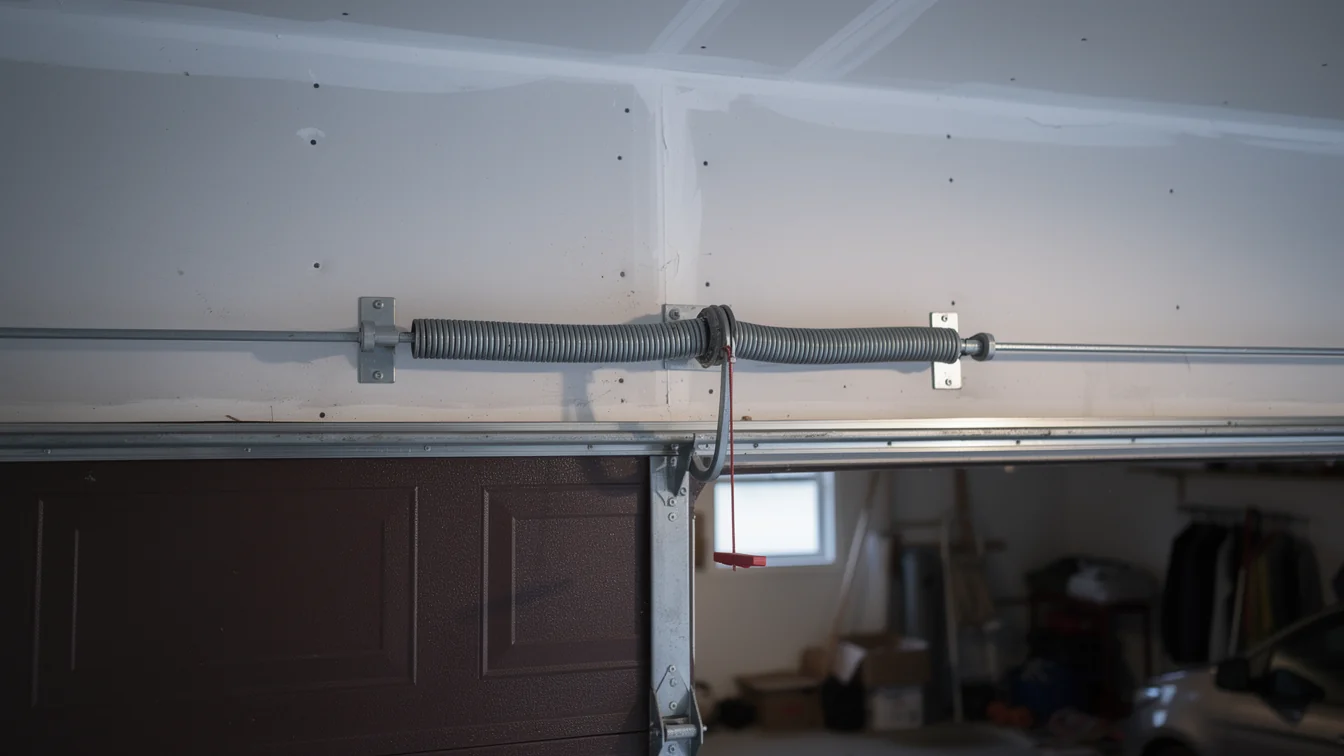
Most of the garages in this service area sit behind doors that went up with the house, and most of those houses were built between 1991 and 2013, with the typical build year landing around 2002. That means a lot of torsion springs out there are now 10 to 20 years old, right in the window where steel fatigue catches up with them. Across the roughly 8,100 households we're talking about, with about 6,105 of those being owner-occupied single-family houses, the majority still have the builder-installed spring and opener hardware that came with the slab. Nobody thinks about a spring until it lets go, usually with a bang loud enough to bring the dog running. The timing isn't random. A spring that's been doing 15,000 open-close cycles a year for two decades is already near the end of its rated life, and it doesn't need much of a push to finish the job. Cold is that push. We get calls that spike hard on the first real cold mornings of the year, almost always from houses in that same 1990s-to-2000s build range, because that's where the springs are old enough to be brittle and the doors are heavy enough to matter.
The area
What Local Conditions Do
Spring Hill sits in a cold-moderate climate band, which means winters get cold enough to stiffen steel but not cold enough that anyone insulates a garage like it's Minnesota. That gap is the problem. A torsion spring loses a measurable amount of flex as the steel temperature drops, and on an unheated garage the inside temperature tracks the outside temperature closely enough that a 20-degree morning puts real stress on metal that was already fatigued from two decades of cycling. The door doesn't care that it's cold - the opener still pulls the same load, the spring still has to supply the same counterbalance force, but it's doing it with less give. That's when a spring that had a few hundred cycles left in it just snaps instead. We don't see this kind of failure pattern in July. We see it in the first cold week, every year, concentrated in houses old enough to have original hardware. It's not a mystery and it's not bad luck - it's a 2002-era spring meeting a 28-degree morning.
What we find
Season by Season
Early winter is when the phone rings most, because that's the first stretch of real cold and it finds every spring that was already near the end. Mid-winter tends to be steadier - the springs that were going to fail on the first cold snap already have, so what's left are cable and roller calls from ice and grit working into the track. By late winter into early spring, as temperatures swing back up, we get a run of opener issues instead, because the force settings that worked fine on a stiff cold spring start pulling too hard on a thawed one, and that strains the opener motor. Summer is slow for spring failures but busier for track and panel work, since that's when people notice dents and misalignment they ignored all winter. None of this is about storm damage - there's no major wind or hail event driving it. It's steel fatigue meeting a predictable temperature cycle, year after year, tied directly to how old the doors in this area actually are.
How we work
What It Costs
We don't post a flat number here because spring replacement cost depends on whether it's one spring or a pair, the door weight, and whether the cable or drum needs attention at the same time - and we're not going to guess at that for your door. What we can tell you is that in a market where the typical household income runs around $104,771, most owners here treat a spring replacement as a planned repair rather than a reason to replace the whole door. That's usually the right call. The door itself, the track, the panels - those often have another decade in them even when the spring doesn't. Where replacement starts to make more sense is when the door is original to a 2002-era build and the opener, track, and springs are all showing age at once; fixing one piece at a time on a door that old can end up costing more over a year than doing it once. We'll tell you straight which situation you're in before we start any work.
Questions
Common questions
Why did my spring break on such a cold morning and not during a storm?
Cold stiffens the steel in a torsion spring, and a spring that's already fatigued from 10-20 years of cycling has less margin to absorb that stress. It's not wind or weather damage - it's old metal meeting a cold morning at the point it was going to fail anyway.
Is my door old enough for this to be a risk?
If your house was built in the 1990s through the early 2010s, which covers most of this area with a typical build year around 2002, your door likely still has its original spring. That puts it squarely in the age range where cold-weather failures show up.
Should I replace the whole door or just the spring?
Usually just the spring. Most doors and tracks in this area have years of life left even when the spring doesn't. Replacement makes more sense only when several original parts - opener, track, spring - are all failing around the same time.
Recommendation
You Might Also Like
More garage door guides for Spring Hill homeowners.
Why Openers Here Struggle With Power Cuts
See why Spring Hill's mostly 2000s-built homes and cold winters make garage door openers fail during power cuts, and what actually keeps them running right.
 What Your Spring Hill Garage Door Is Actually Dealing With
Spring Hill homes built 1991-2013 mean specific spring and opener needs.
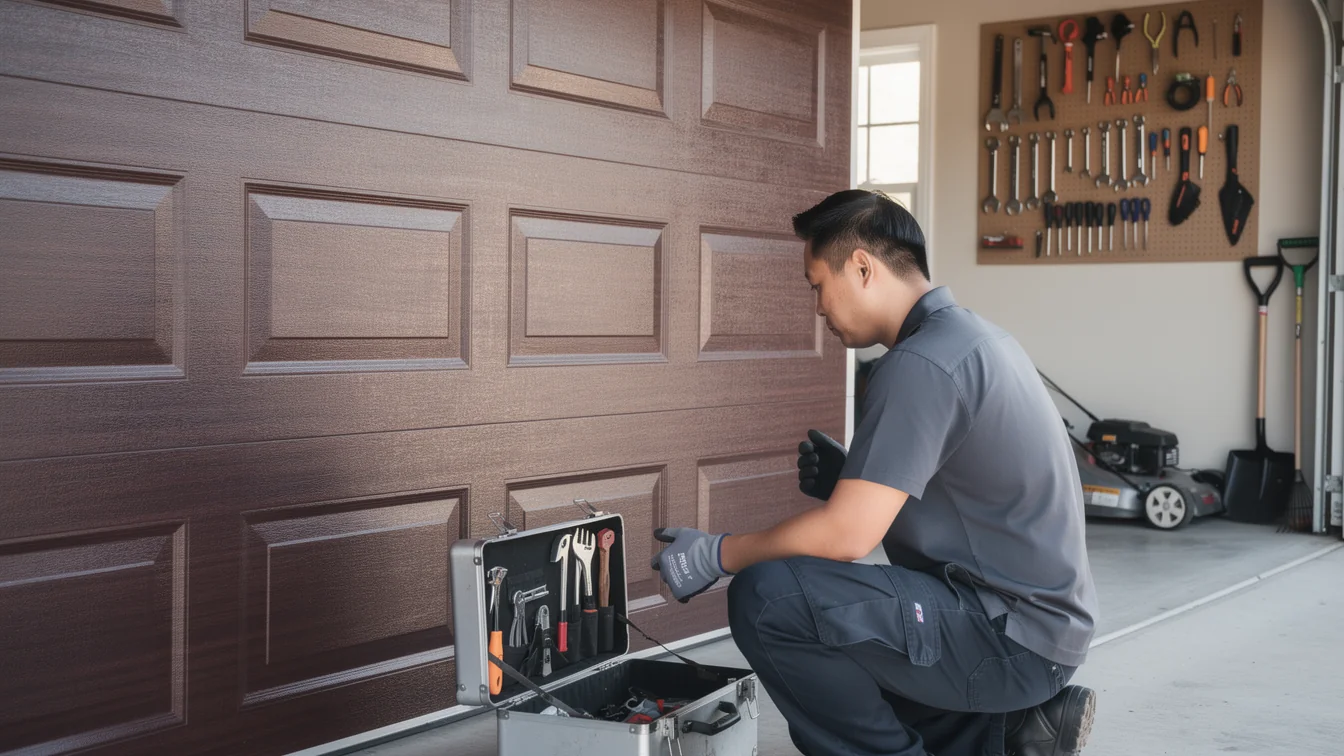 What We Actually Check When We Come Out
Spring Hill homes mostly date to 1991-2013.
Ready when you are
Need a garage door sorted in Spring Hill?
Spring Hill Garage Door Pros repairs and installs garage doors, springs and openers in Spring Hill, TN and the surrounding area.